
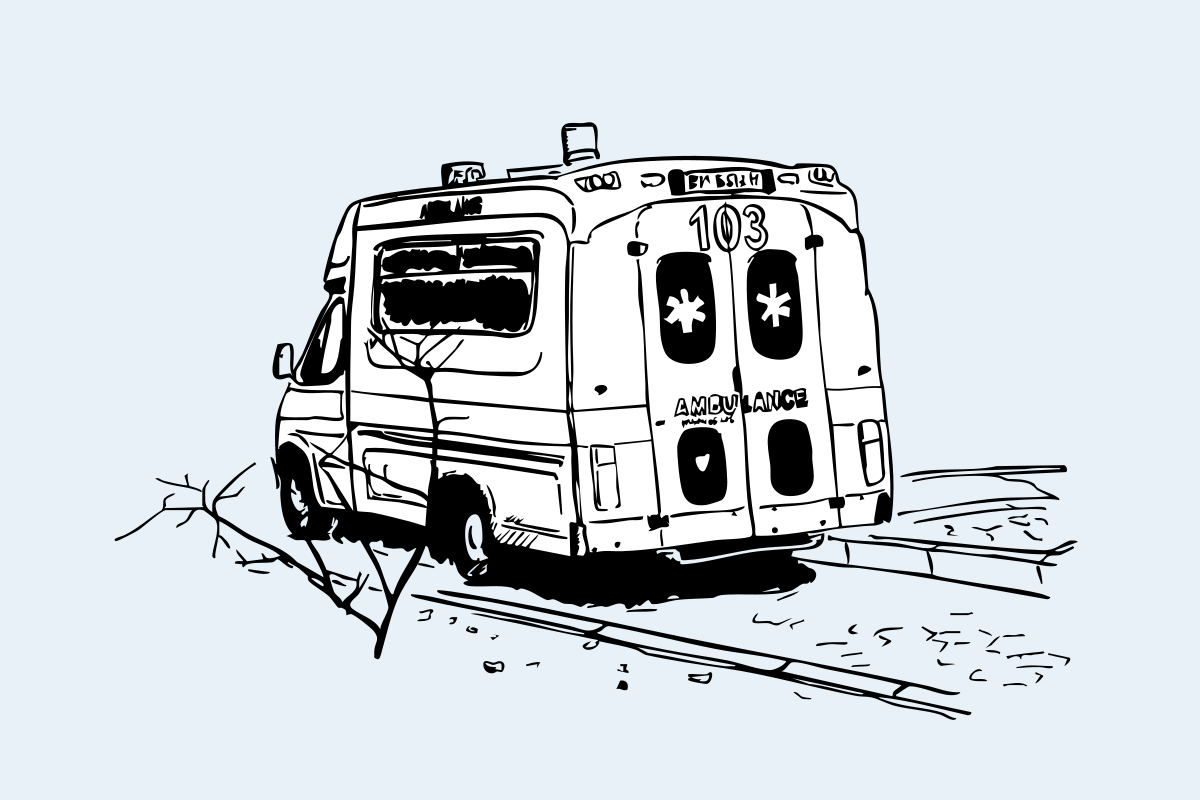
In the traditional model of primary care, physicians provide health services to their patients in their offices, in nursing homes and in hospitals. This role is increasingly being shared with nurse practitioners and other health care professionals who work together to deliver care and provide referrals to other supportive community based healthcare services. These primary care teams typically operate in clinics such as Family Health Teams or Community Health Centres, which can be inaccessible to underprivileged populations due to the increasing shortage of family doctors who can take on new patients, or simply because transportation barriers to get to a clinic, exist. In an ever-evolving healthcare landscape, innovative models of care are emerging to address the diverse needs of communities in ways that will increase efficiencies and reduce costs. One such nontraditional and direct-to-consumer approach is community paramedicine, a concept that is transforming the way healthcare is delivered and is proving to be a lifeline for underserved and remote populations. The community paramedicine model is bridging the gap between emergency medical services and primary care, ensuring timely and personalized interventions that enhance the overall health and wellbeing of communities. Understanding Community Paramedicine Community paramedicine is an extension of traditional emergency medical services (EMS), but with a broader scope that goes beyond their traditional 911 emergency services role. Alongside their essential emergency medical services training, community paramedics are taught to provide care coordination, preventive care and health education to patients within their communities. This shift from a reactive to a proactive approach empowers paramedics to play a pivotal role in disease prevention, chronic disease management and overall health promotion, thus reducing unnecessary hospitalizations and improving patients’ quality of life at home. The Growth of Community Paramedicine Over the past decade, the concept of community paramedicine has gained significant traction both here in Canada and across the globe. As healthcare systems face challenges such as overcrowded emergency departments, limited access to primary care in rural areas and the rising burden of chronic diseases, community paramedicine offers a scalable solution. Many healthcare organizations, governments and EMS providers have recognized its potential and have begun implementing community paramedicine programs, leading to an increasing number of emergency hospital diversions, reducing the strain on an already limited health care system. Community Benefits: Enhanced Access to Care: Community paramedics bring healthcare services directly to patients' doorsteps, especially in underserved or geographically isolated areas. This eliminates transportation barriers and ensures that individuals receive timely medical attention, preventing health issues from escalating to an emergency status. Preventive Care and Health Education: Paramedics are well-equipped to offer preventive care services such as immunizations, health screenings and chronic disease management. By educating patients about healthy lifestyles and disease management strategies, community paramedicine promotes overall wellness. Reduced Healthcare Costs: By addressing health concerns before they become emergencies, community paramedicine helps reduce the burden on emergency rooms and hospitals. This leads to cost savings for both healthcare facilities and patients. Personalized Care Plans: Community paramedics work closely with patients to develop personalized care plans based on their specific health needs and goals. This patient-centered approach fosters better outcomes and empowers individuals to take charge of their health. Integration with Healthcare Teams: Community paramedics collaborate with primary care physicians, nurses, social workers and other healthcare providers. This integration ensures a holistic approach to patient care and facilitates the coordination of services, promoting smoother care transitions and timely referrals to other community based support services, such as Meals on Wheels or Friendly Visiting. Case Study: Eastern Ontario Community Paramedic Program (EOCPP) EOCPP is the result of a collaborative effort involving 11 paramedic groups covering a large part of Eastern Ontario. The website, communityparamedics.ca , launched in 2022 and has redefined healthcare access in rural areas by focusing on delivering crucial community paramedic services to underserved communities. Through this website, any caregiver, hospital staff, physician or patient can enter a home address and find the community paramedicine program that delivers in-home care where they live. Service requests can be made directly through the website, immediately and securely connecting the patient with the right community paramedicine team that will follow up with a phone call to confirm their eligibility and get them signed up to the program. Craig Jones, Deputy Chief Community Programs and Emergency Management for Peterborough County/City Paramedics and a staunch advocate for this digital approach, emphasized the program's success in eliminating the need for time-consuming faxes and underscored the importance of ensuring compliance with the Personal Health Information Protection Act (PHIPA). "We elected to be digital only. The reason we did that is to be PHIPA compliant, and I would hazard to guess that my fax machine is not PHIPA compliant." In his role as Deputy Chief, Craig also understands that enhancing efficiency means enabling interoperability. “The integration between platforms like Caredove, Epic, and Ocean now allows for the referral process to be as easy as a single click.” This digital transformation has enabled the acceptance and completion of 729 referrals between October 1, 2022, and August 7, 2023, demonstrating the program's effectiveness in rapidly connecting patients with the care they need. Technology at the forefront In a digital age, initiatives like communityparamedics.ca , have proven that embracing technology not only ensures compliance, but also expedites access to healthcare. By making public service requests easier with secure online booking through Caredove, community paramedicine programs like EOCPP are significantly increasing access to essential healthcare services, ultimately improving the lives of those with barriers to traditional care.

A truly effective central intake hub is not merely a team of staff manually routing referrals behind a veil of complexity; it is an integrated system that dynamically combines public accessibility, algorithmic precision, real-time capacity management, and seamless communication to ensure patients receive timely and appropriate care.
Access to community healthcare is paramount for individuals across various stages of life — from seniors desiring to age gracefully in their own homes, to new parents seeking care for their infants and individuals in need of mental health and addiction support. Traditionally, when we mention referrals, the image of a physician sending a document to a specialist comes to mind. However, the landscape of healthcare referrals is evolving, and it's time to redefine our approach. Gone are the days when referral management systems solely relied on healthcare professionals. Take Caredove, for example. What was once considered a referral management system has transformed significantly to a multichannel access management platform. Surprisingly, 43% of referral activity now stems from direct public sign-ups. This shift is monumental, with a staggering 70-fold increase in public service requests compared to pre-pandemic levels in 2019. Clinician referrals will be the minority of service requests activity in our platform by the end of 2024. Why this paradigm shift? During the pandemic, communities learned the importance of direct access to essential services. The notion of gatekeeping community services in any manner like specialist services became obsolete. The crisis strengthened the muscles of direct access, emphasizing the significance of preventive health through social and other services that keep people out of hospitals and other care facilities. Moreover, primary care is under immense strain, with 15% of Canadians lacking consistent access to ongoing primary care. In such a scenario, burdening already stretched healthcare professionals with more referral duties is not sustainable. Accessing services directly not only expedites the process but also empowers individuals to take charge of their own health journey. It signifies readiness for change and recovery, without the artificial requirement of seeing a physician solely for a referral. Primary care remains crucial, and it's imperative to equip them with resources available at their fingertips, enabling them to navigate the healthcare landscape autonomously. After all, patients trust their primary care providers, and we should harness this trust. We also need to foster a culture of self-advocacy and consumer empowerment as part of a broader solution. Community agencies are champions of a healthcare system where individuals are empowered to take control of their health, supported by a network of trusted professionals. In an era of putting patients before paperwork, it is time to embrace direct access and take every bit of unnecessary administrative burden off family doctors and nurse practitioners, in the process.
Imagine a healthcare agency dedicated to serving its community, yet unknowingly putting patient privacy at risk with each click of 'send' to an email account. In today's digital age, safeguarding sensitive health information isn't just a legal obligation—it's the cornerstone of trust and integrity in healthcare. Let's explore why relying on 'shared@communityhealthcare.ca' for referrals could be a costly oversight, jeopardizing both patient confidentiality and the agency's reputation. Email and Referrals… a bad match Using email for sending and receiving referrals is a poor practice that can lead to significant privacy, security and compliance issues. Inadequate Security Measures: Standard email lacks robust security measures. Most email services do not provide end-to-end encryption, making the content vulnerable to interception during transmission. This inadequacy exposes sensitive patient information to potential breaches. Potential for Human Error: Emails can be easily sent to the wrong recipient, leading to unintentional disclosure of PHI. Such errors not only breach patient confidentiality, but also open up the organization to legal liabilities and loss of trust. Challenges in Auditing and Monitoring: With email, it is difficult to maintain a comprehensive audit trail. Healthcare agencies need to track who accessed specific patient information and when. Emails, especially those sent from shared accounts, do not provide the necessary level of detail to maintain a reliable audit trail. Record Keeping : Proper documentation and tracking of referrals are essential in healthcare for continuity of care and legal reasons. Secure systems designed for healthcare referrals often have features that ensure proper tracking and logging of communications, which standard email systems lack. Lacking Consent Interface: Email has no specific method, such as a click-through agreement, for ensuring consent is actively collected before proceeding with a referral. Such a consent interface establishes a clear record and helps protect confidentiality by ensuring all parties involved understand and agree to the referral process before information is shared. Furthermore, such an interface can enable revocation of a referral, and deletion of patient health information, if consent is later withdrawn - something that cannot be done with email. Simply put, your standard Outlook email inbox is not PHIPA or HIPAA compliant. Example: Eastern Ontario Data Breach Incident : In 2016, an Ontario Hospital experienced a data breach when emails containing sensitive patient information were sent to incorrect recipients. Details : Human Error : Staff at the specific hospital mistakenly sent referrals containing personal health information (PHI) via email, to the wrong recipients. Lack of Encryption : The emails were not encrypted, making the information vulnerable to interception and unauthorized access during transmission. Inadequate Security Protocols : The hospital lacked adequate security protocols and training to prevent such errors and to ensure that sensitive information was sent securely. Consequences : Patient Privacy Compromised : The breach compromised the privacy of numerous patients, exposing their sensitive health information to unauthorized individuals. Regulatory Scrutiny : The breach prompted an investigation by the Information and Privacy Commissioner of Ontario (IPC), which scrutinized the hospital's email security practices and compliance with privacy regulations. Public Trust Eroded : The incident was damaging to the hospital’s reputation and undermined patient confidence. The hospital had to undergo significant remediation efforts. Lessons Learned: Standard email services lack encryption necessary to enable interorganizational referrals. Secure online forms , either on the organization website, or for facilitating system to system referrals, are a necessary alternative to email. Going from Bad to Worse - Shared Email Accounts Shared email accounts, such as 'navigators@seniorhealthcompany.com' or ‘intaketeam@hospital.com’, allow multiple staff members to access the same inbox using the same credentials. Unfortunately, this seems to be common practice when multiple staff share a role. This further exacerbates the problems of email. Lack of Accountability: Sharing an email account makes it nearly impossible to track who accessed or sent specific emails. Without individual accountability, it becomes very challenging to audit actions and ensure compliance with privacy regulations. Healthcare agencies need to track who accessed specific patient information and when. Emails, especially those sent to or from shared avcounts, do not provide the necessary level of detail to maintain a reliable audit trail. Individual accounts are a precursor to enabling Role Based Access Controls (RBAC) which further can restrict access to what is necessary for a person’s specific role. Security Vulnerabilities: Using shared email accounts increases the risk of unauthorized access. For example, if an employee leaves the organization but still knows the shared email password, they could potentially access sensitive patient information. Also, setting up two factor authentication for email becomes problematic with shared email accounts, as 2FA relies on a unique access point, like a mobile device, to receive an authentication code. This lack of control over email access poses a significant security threat. Regulatory Compliance Issues: Regulations like HIPAA in the US and PIPEDA in Canada mandate strict controls over who can access personal health information (PHI). Shared email accounts often fail to meet these requirements, leading to non-compliance. Healthcare organizations could face hefty fines and penalties for failing to protect PHI adequately. Example: West Ontario Data Breach Incident : In 2018 an Ontario Hospital experienced a data breach due to inadequate email security. It was reported that unauthorized emails containing sensitive patient information were sent from a shared email account. Details : Commissioner Investigation : Office of privacy commissioner conducted an investigation. Inadequate Controls : Shared email accounts were found to lack proper access controls, and there were insufficient safeguards to prevent unauthorized access and use of the account. Inadequate Security Protocols : There could be no effective security audits given the lack of control on system access. Consequences : Patient Privacy Compromised : The breach may have compromised the privacy of numerous patients, exposing their sensitive health information to unauthorized individuals. The extent of the breach was difficult to assess. Orders by Regulator : A series of recommendations and orders were issued, covering email administration, security, encryption, training and auditing. Public Trust Eroded : The incident harmed the hospital’s reputation and undermined patient confidence. The hospital had to undergo significant remediation efforts. Lessons Learned: A system of unique user accounts , for email and any other systems of record containing sensitive information, must be implemented and managed at a healthcare organization to maintain regulatory compliance. In summary, the use of email accounts to send or receive healthcare referrals poses substantial threats to patient confidentiality, organizational integrity, and legal compliance. The examples of data breaches highlight the vulnerabilities and consequences of inadequate and insecure email-based referral practices. To safeguard sensitive health information, healthcare organizations must implement secure, individualized referral systems, like Caredove's access management solution, to ensure robust security measures, strict access controls and PHIPA/HIPAA compliance. By adopting these measures, healthcare providers can protect sensitive patient information, comply with regulatory requirements, and foster a trusted environment for patient care.